
Written By
Takhsha Abbasi
BS English
National University of Modern Languages
“If education is the foundation of a nation, why does Pakistan continue to treat it as a low priority?“
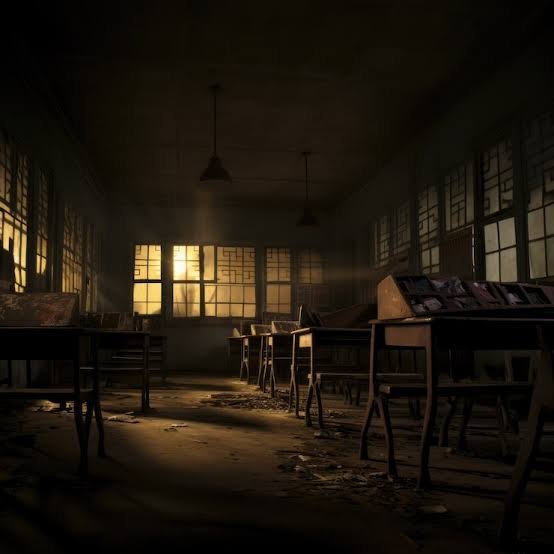
Every morning across Pakistan, millions of children wake up and prepare for school. Millions more never do. Their classrooms remain empty, not because they lack ambition or the desire to learn, but because the nation has failed to make education the priority it claims it is. Behind every child who is out of school lies a story of poverty, inequality, or a system that continues to fall short of its promises.
The State of Education in Pakistan
The contradiction becomes difficult to ignore when we look at the realities of education in Pakistan. According to UNICEF Pakistan (2025), nearly 25 million children between the ages of five and sixteen are out of school. This is one of the highest out-of-school populations in the world. Behind this figure lie millions of individual stories, children whose opportunities shrink before they have even entered a classroom.
For those who do attend school, the experience is often far from ideal. Across the country, many public schools struggle with overcrowded classrooms, teacher shortages, inadequate facilities, and limited learning resources. In some rural areas, schools operate without basic infrastructure. In others, children must travel long distances simply to receive an education. According to UNICEF Pakistan, nearly 69 percent of school-age children in Baluchistan remain out of school. It is the province with the country’s highest out-of-school rate. Girls suffer disproportionately, especially in economically disadvantaged and remote communities.
Why Education Funding Falls Short
These challenges are not the result of a single policy failure. Rather, they reflect decades of insufficient investment and inconsistent planning. Every government promises educational reform, yet meaningful progress remains frustratingly slow. The issue is not a lack of awareness; it is a lack of urgency.
Budget allocations often reveal more about national priorities than political speeches. Every year, budget debates focus on economic recovery, development projects, and fiscal stability. Education is usually acknowledged as important, but it rarely occupies a central place in the national conversation. This pattern shows in spending figures.
According to the UNESCO Global Education Monitoring (GEM) Report, countries should allocate 4 to 6 percent of GDP to education to build strong and equitable systems. Pakistan, however, has consistently spent well below this benchmark. The Pakistan Economic Survey 2025–26 reports that public expenditure on education remains among the lowest in the region. This highlights the gap between public commitments and actual investment. More recently, education spending has fallen even further, widening that gap. Budgets are more than financial documents; they reflect a nation’s priorities. When education repeatedly gets less attention than other sectors, it is hard to claim that investing in the country’s future is a true priority.
The Economic and Social Cost
No country has achieved sustainable development while neglecting its education sector. Nations that transformed themselves from developing economies into global success stories did not do so through infrastructure projects alone. They invested heavily in schools, teachers, research, and skills development because they understood that human capital is a country’s most valuable resource.
Pakistan’s economic challenges are closely linked to the state of its education system. Businesses frequently report difficulties finding workers with the skills required in a modern economy. At the same time, unemployment among educated youth continues to rise, suggesting a mismatch between what students learn and what employers need. An underfunded education system produces consequences that extend far beyond the classroom, affecting productivity, innovation, and long-term economic growth.
The social consequences are equally significant. Many see education as one of the most effective pathways out of poverty. When access to quality education depends largely on a family’s income or geographic location, inequality becomes deeply entrenched. Students attending well-funded private institutions enjoy opportunities that remain out of reach for many children in the public sector. As these gaps widen, social mobility becomes increasingly difficult.
The irony is that Pakistan possesses a demographic advantage that many countries would envy. With one of the youngest populations in the world, the country has the potential to transform its economic future. However, a young population becomes an asset only when it gains education and skills and can contribute meaningfully to society. Otherwise, what could have been a demographic dividend risks becoming a missed opportunity.
The Way Forward
Addressing the crisis will require more than increasing budget allocations, though greater investment is essential. Schools need modern facilities, teachers need better training and support, and curricula need updating for a rapidly changing world. Schools should place greater emphasis on critical thinking, problem-solving, digital literacy, and practical skills that match today’s economic realities. Equally important is ensuring that educational opportunities reach underserved regions and marginalized communities.
The debate over education is ultimately a debate about the kind of future Pakistan wants to build. A country that aspires to compete in a knowledge-driven global economy cannot afford to underinvest in the sector that produces its future workforce, innovators, and leaders. Promises of progress will carry little weight without meaningful commitments.
Pakistan often describes its youth as its greatest strength. If that statement is to be more than a political slogan, it must show in national priorities. The country’s future will depend not on promises in budget speeches but on conditions inside its classrooms. Until education receives the investment it deserves, hopes for economic growth, social progress, and national development will remain out of reach.
The question, therefore, is no longer whether education matters. The evidence is overwhelming. The real question is whether Pakistan’s policymakers are prepared to invest in the future they so often promise.